|
Cards of Christmases Past Click on the cards to see them full size |
||
|
|
||
|
|
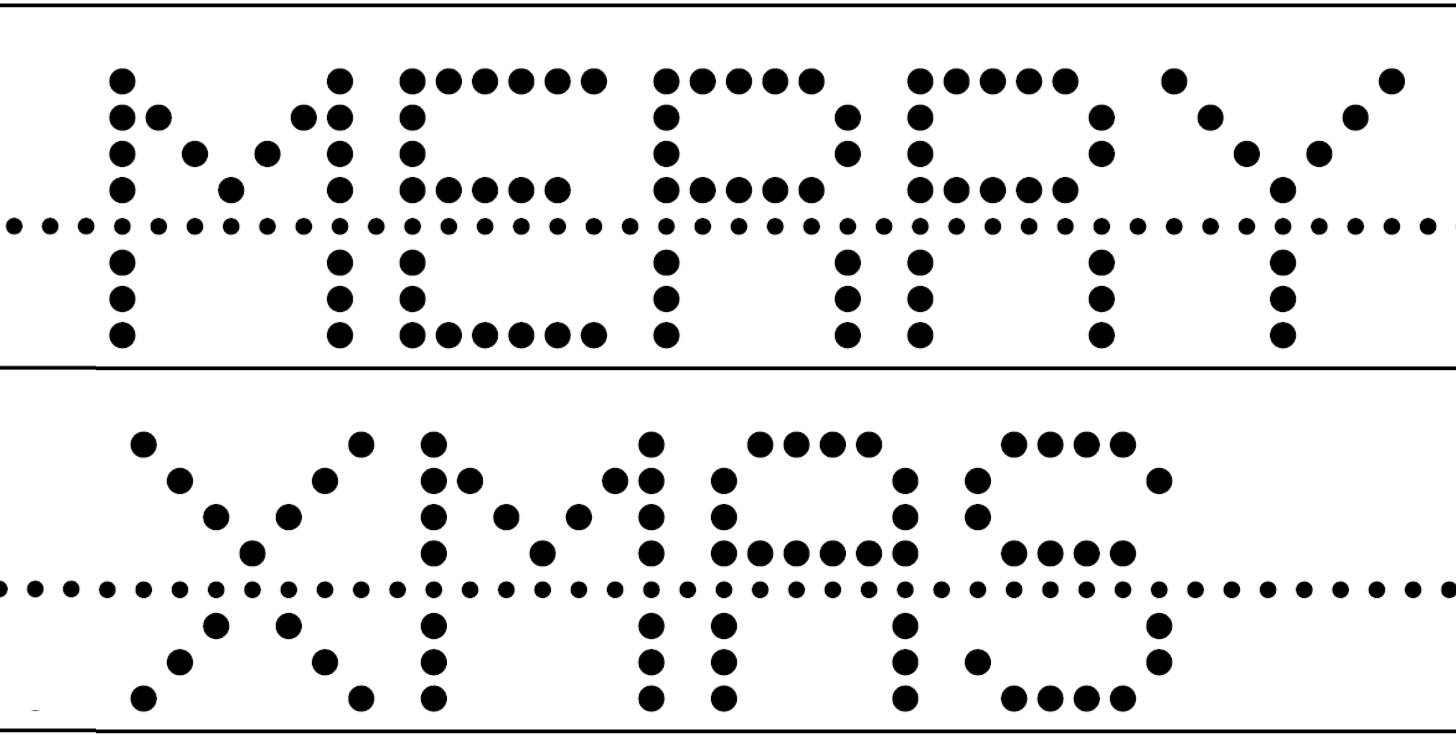
1980 This one was not a card, but inspired the whole home-made cards thing. The 'Merry Xmas' design was punched into 7-hole computer tape. Lengths of the tape got strung around the house as decorations. The tape was used at the time to save programs or files. It could also be read back into the computer using a teletype terminal. Sadly no original tape survived, so I had to recreate the appearance using a Python program.
|
|
|
|
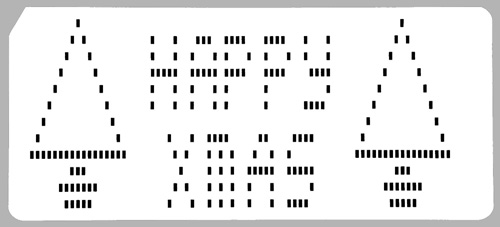
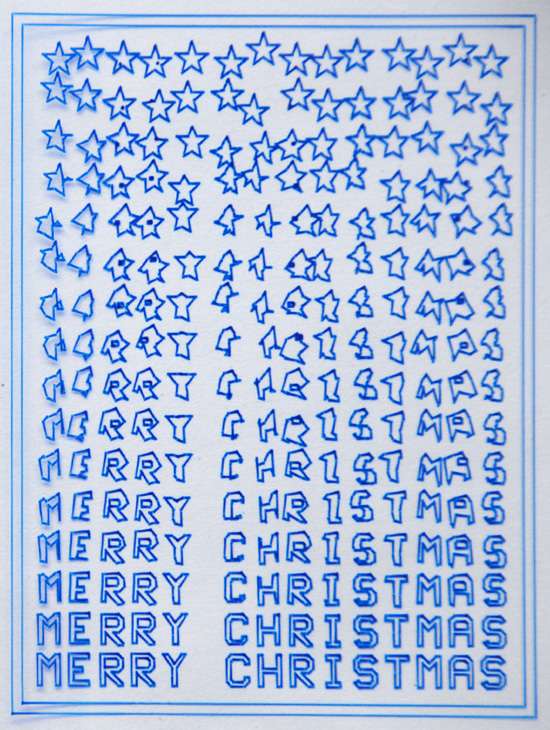
1981 Made from an IBM service bureau punched card it proved quite a challenge to duplicate. Real cards have no more than three holes per column and this was all the punch machine could manage without making funny noises. To avoid the problem I had to punch each card several time to complete the design. The cards were originally used to program computers, one line of program was written on each card and the stack was fed into a reader. It was a huge pain if you dropped the deck.
|
|
|
|
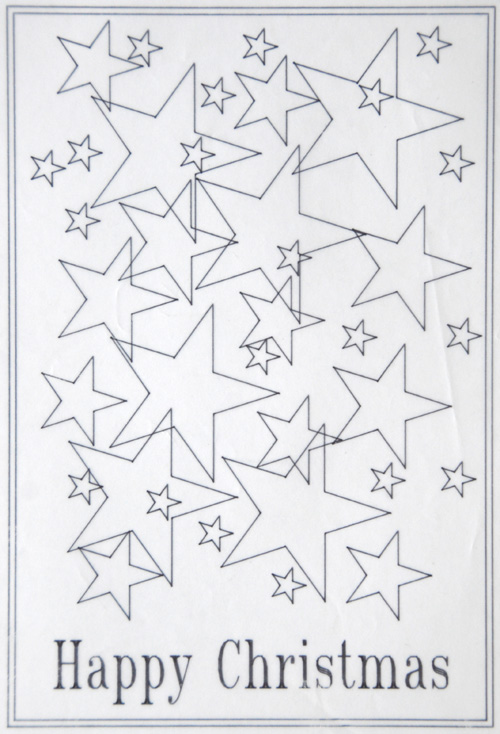
1982 About the only way to produce graphical output at the time was to use a pen plotter. The pen was held in a large machine and moved over the paper (or sometimes the paper was moved under the pen). The drawing was created using a printed circuit layout system. Computer graphics tools were very crude at that time. |
|
|
|
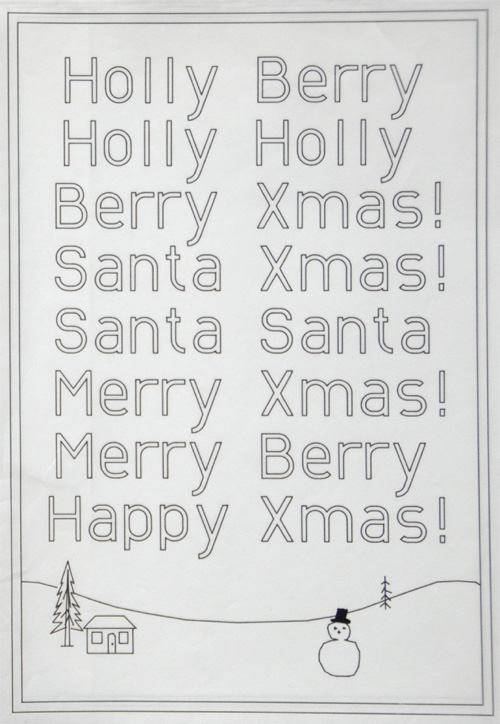
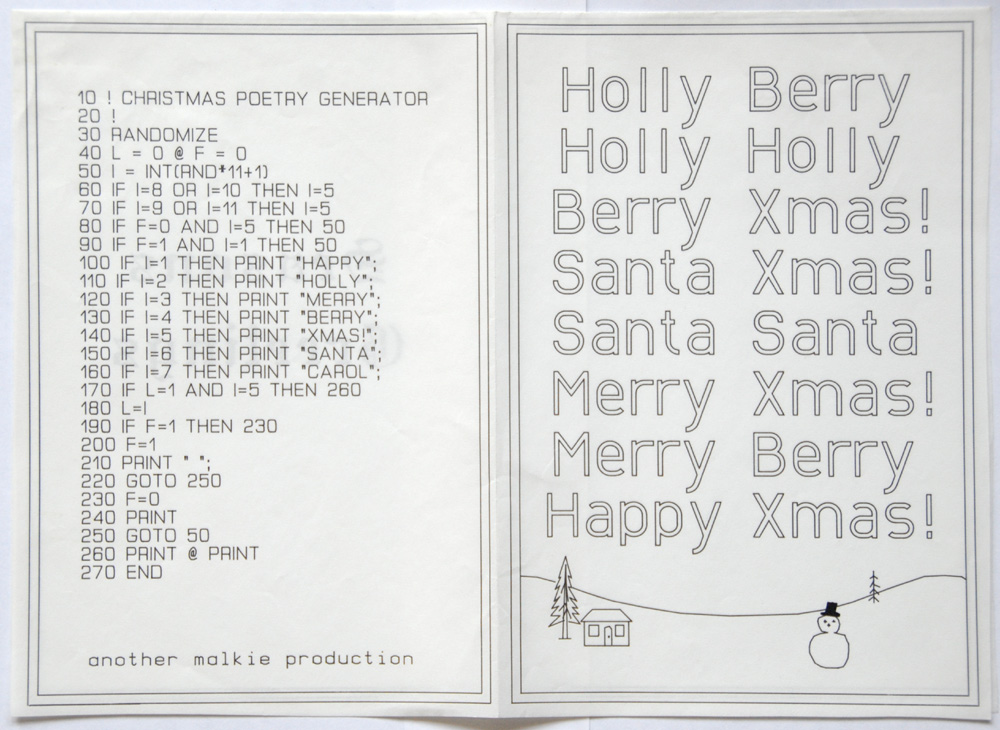
1983 This card was produced in the same way as the last one but featured a computer generated poem. The program, run on an early HP personal computer, appeared on the back of the card. Click here to see it. |
|
|
|
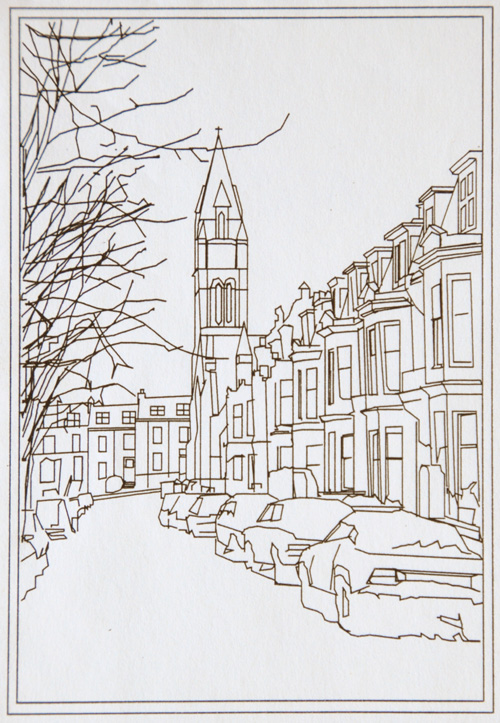
1984 Producing realistic images on computers of the day was not easy. This card was painstakingly digitized line by line from a photograph I took near my house in Edinburgh on a snowy day. |
|
|
|
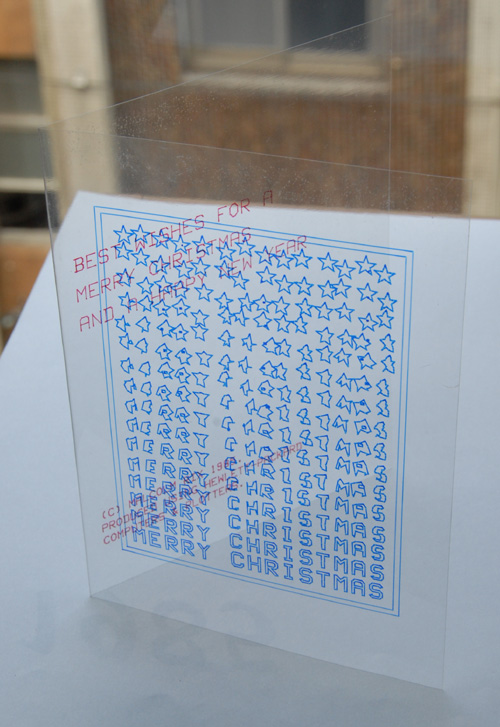
1985 This card was plotted on a transparency. The design is based on a program that morphs one shape into another. A curiosity though was that the transparent card was almost invisible when put on a shelf (click here). I think my Mum got some kind of prize for the most original Christmas card from the local townswomens guild! |
|
|
|
1986 I'd been struggling for a while to design a computer program to display projected 3D images. It turned out to be much more difficult to realize in vector graphics than I had thought (most modern programs of this type use pixel rather than vector graphics). |
|
|
|
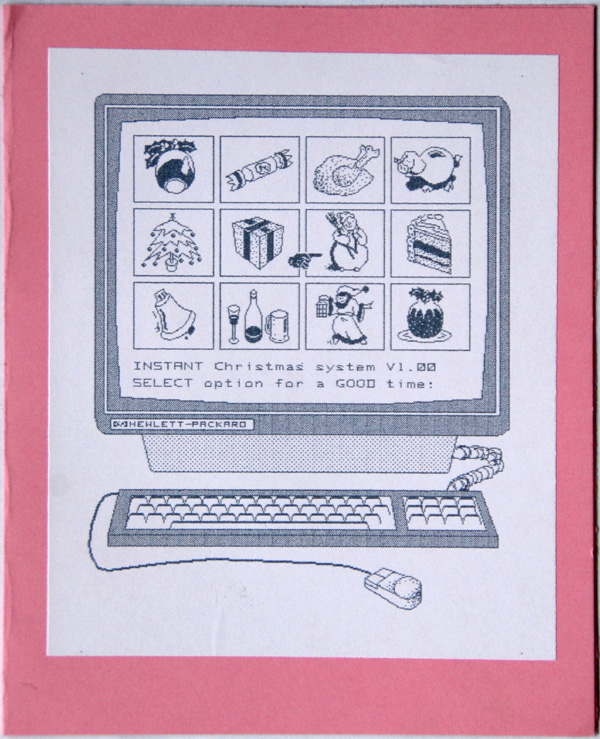
1987 This was the first card based on pixel graphics, as all subsequent ones would be. Software tools available were very crude so the card design pretty much had to be designed pixel by pixel. I got a lot of help from my friend Jean-Luc Addams. It was printed on HP's first InkJet printer. |
|
|
|
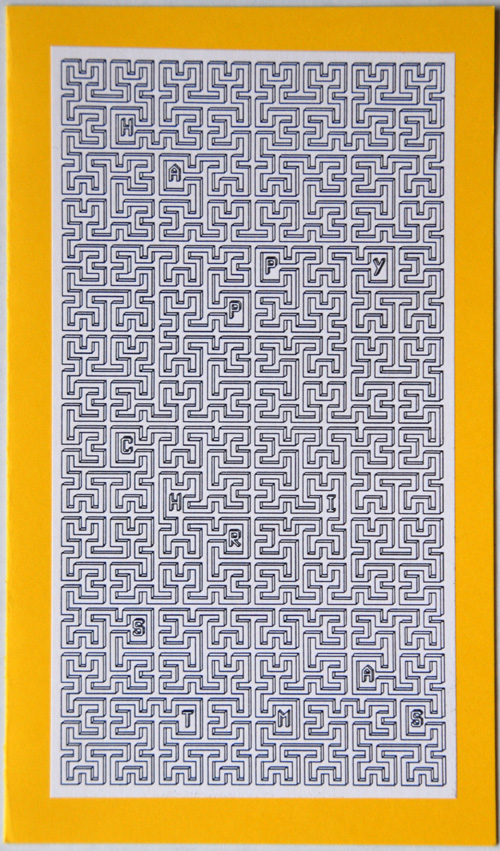
1988 Laser printers were becoming available at this time, but image sources were more of a problem. Writing programs to produce interesting patterns was a choice employed here. The design is based on a Hilbert space filling curve, a fractal design that can be modified to occupy an arbitrarily large space. The letters were inserted into the design manually. |
|
|
|
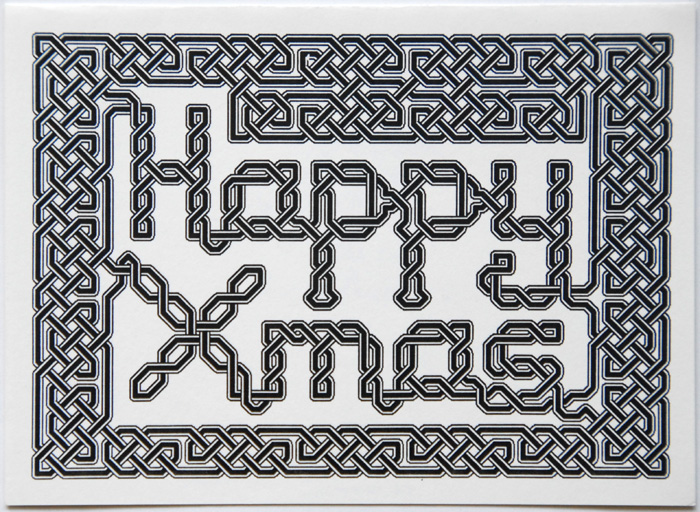
1989 The inspiration for this pattern comes from Celtic knot patterns. I wrote a program to produce pictures of them based on a very fine book on the subject by Iain Bain. |
|
|
|
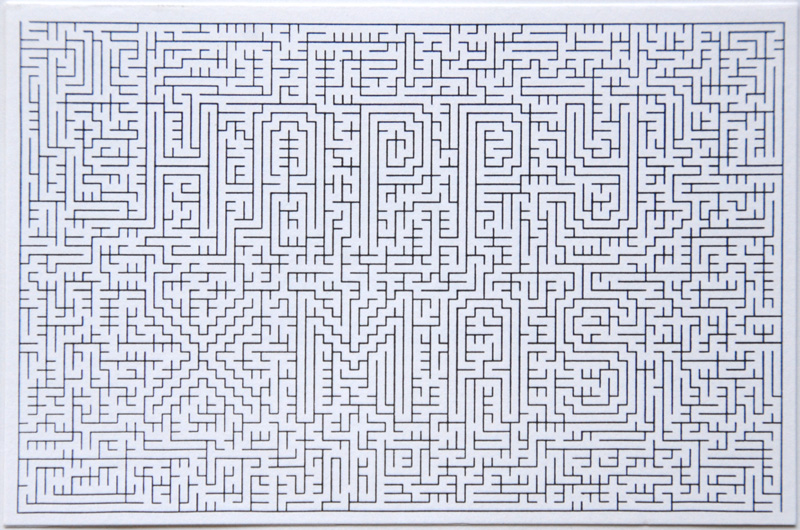
1990 This card is a computer generated maze. As some recipients discovered there is a single path through the maze. The "Happy Xmas" design was inserted into the maze before putting in the other walls. |
|
|
|
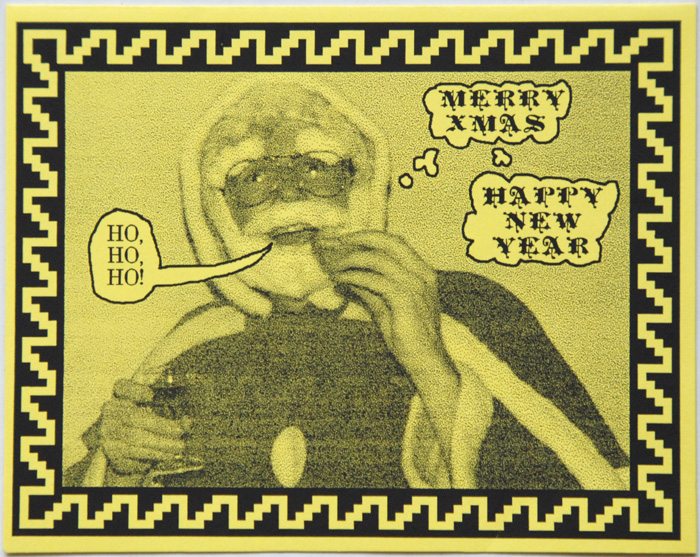
1991 Consumer image scanners were appearing on the market for the first time although I was still stuck with the laser printer for output. I posed as Santa myself, complete with a glass of sherry and a mince pie. I think you can really only recognize me from the glasses. Scanner resolution at the time was quite poor. |
|
|
|
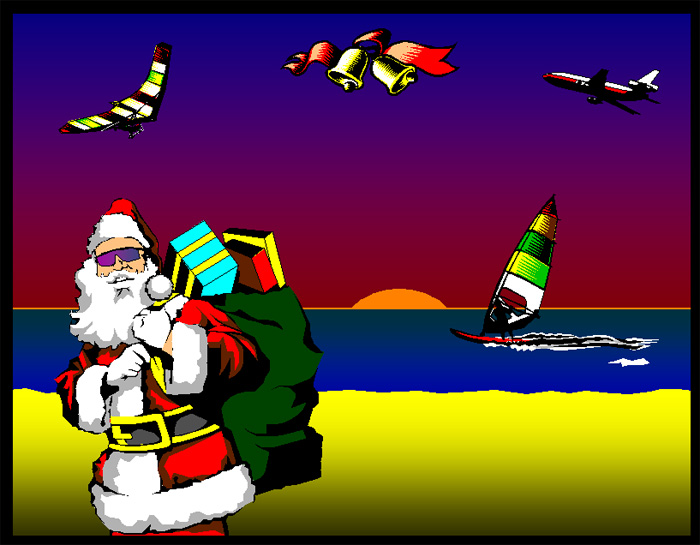
1992 By the time this card was made I was working in HP's San Diego printer division and had access to color inkjet printers, even if the colors were a bit on the acid side by today's standards. Many of the following cards were printed on ink-jet printers of one type or another. San Diego's year round beach climate was the inspiration for the design of the card. |
|
|
|
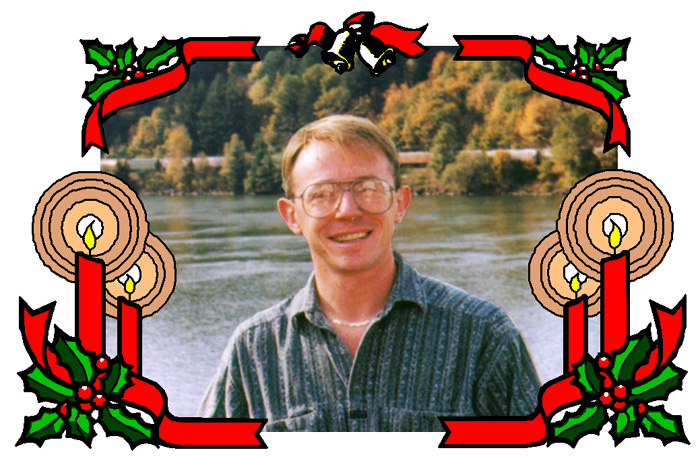
1993 Consumer imaging was coming together by this time and it was possible to combine the scanned photo with clip art. The design was printed on a large format color inkjet plotter, which while overkill did make the production very quick! |
|
|
|
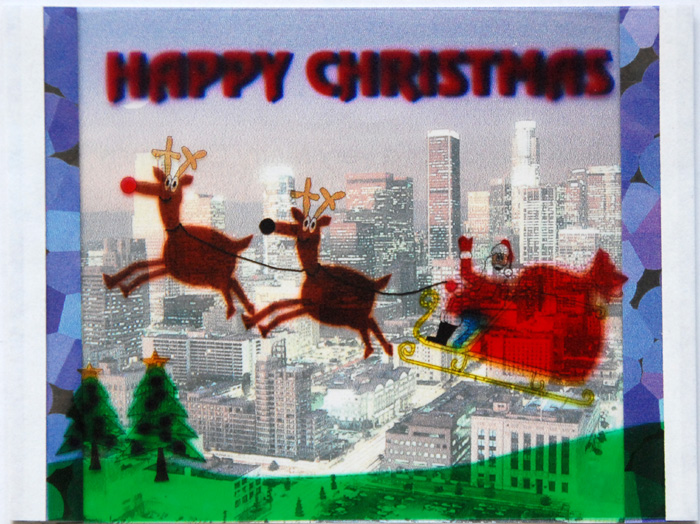
1994 This card was real funny. Santa and his reindeer were printed on a transparency. The concertina design lets it stand out in front of the background so they appear to be flying over downtown LA. Sadly the transparency was not very stable and the ink has bled somewhat over the years. |
|
|
|
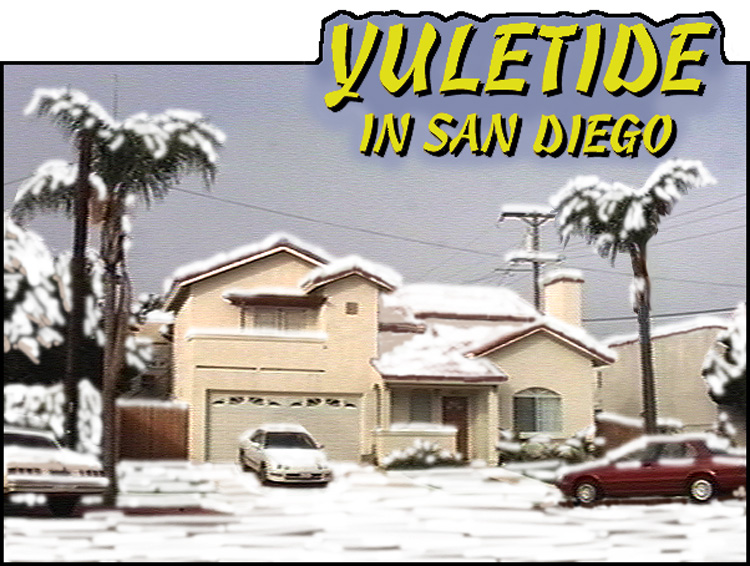
1995 Adobe Photoshop was used to create this fanciful view of my house in San Diego in the snow (it never snows in San Diego, it's too warm). I like the snow on the palm trees. I appear in a picture with Luis inside.
|
|
|
|
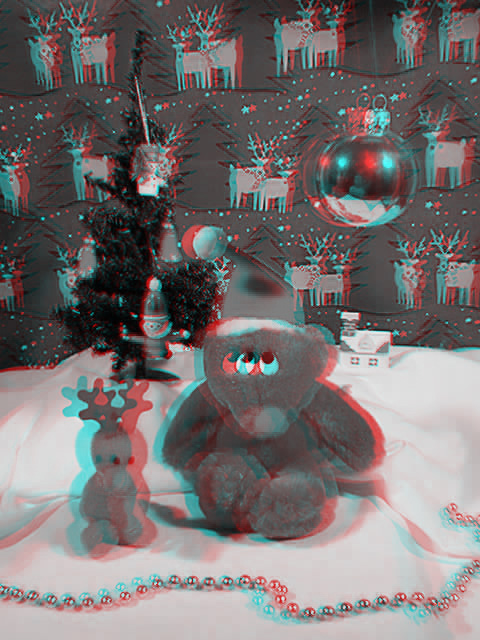
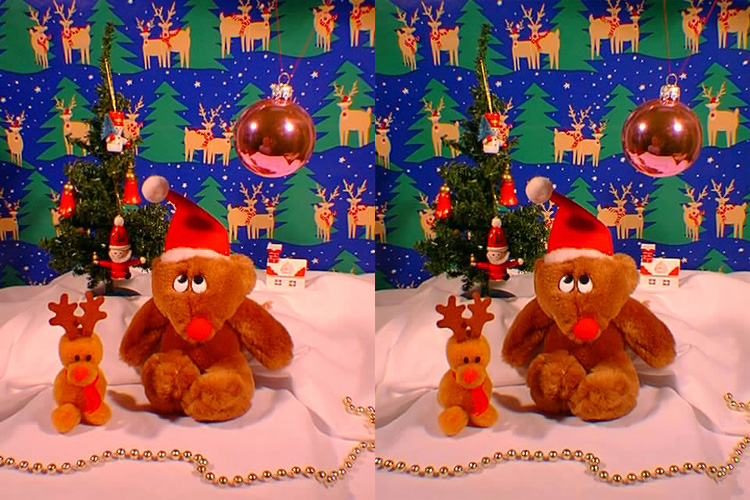
1996 The picture is a 3D stereogram. Each card had a pair of red-green glasses inside to enable viewing. Inside was a color version which needed a rather harder cross-eyed viewing technique. Not many people were able to see it but if you want to try it is the picture on the right. |
|
|
|
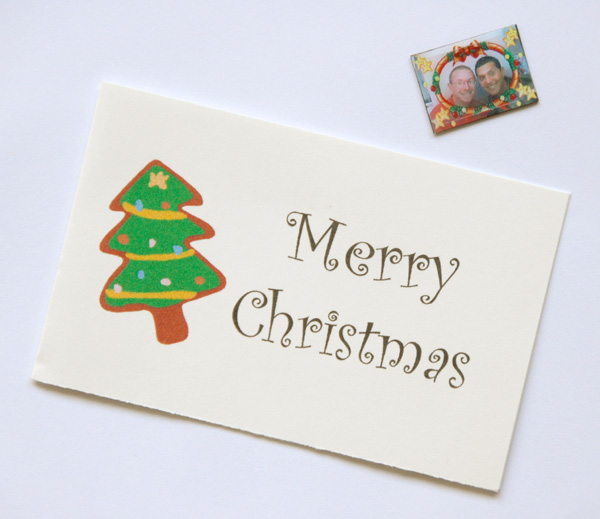
1997 This card was tiny and contains a fridge magnet with a picture of Luis and myself. I'd been to Japan around this time and was fascinated by the sticker printing machines that were invading arcades across the country. We found a machine in San Diego. The magnets came from a craft store and were stuck on by hand.
|
|
|
|
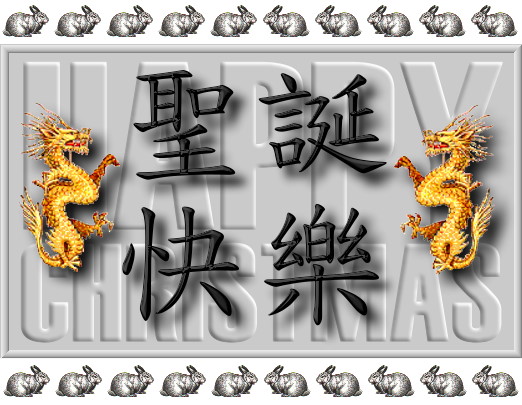
1998 Some of the best designs were the ones I came up with in a hurry. I'd just moved to Taiwan and started working in Ulead Systems. It was created using their PhotoImpact computer graphics product. The Chinese just says "Happy Christmas". Rabbits appear on the edges of the card because 1999 was Chinese Year of the Rabbit. |
|
|
|
1999 Yours truly once again this time posing as Santa on his scooter sleigh. Scooters are endemic in Taiwan so its quite appropriate. Rudolph is a glove puppet. The background is Taiwan's Taroko Gorge. |
|
|
|
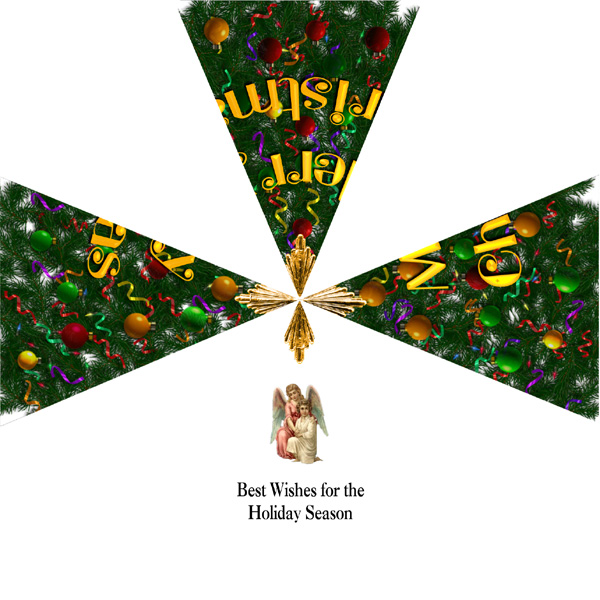
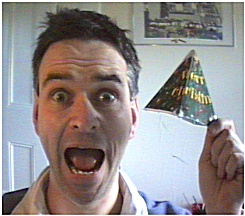
2000 Recipients of the 2000 card had to follow instructions on the back of the paper to fold it into a small Christmas tree. My friend Steve Hoole kindly sent me a picture of himself to show he managed it... |
|
|
|
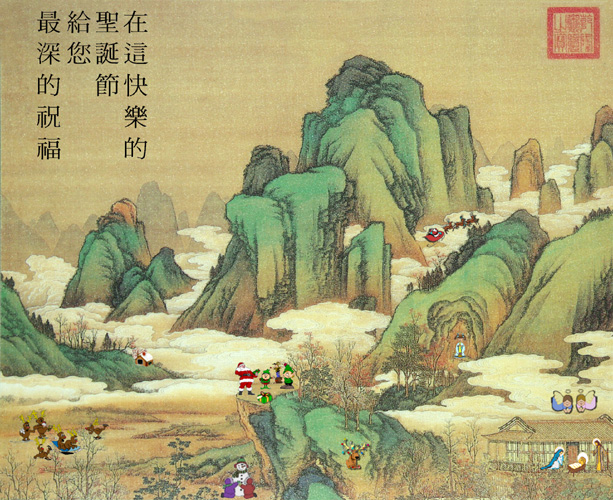
2001 The background is from a painting in the National Palace Museum in Taipei. Little Christmas figures have been inserted into the painting. You can read the full story of this card and how it was made here. |
|
|
|
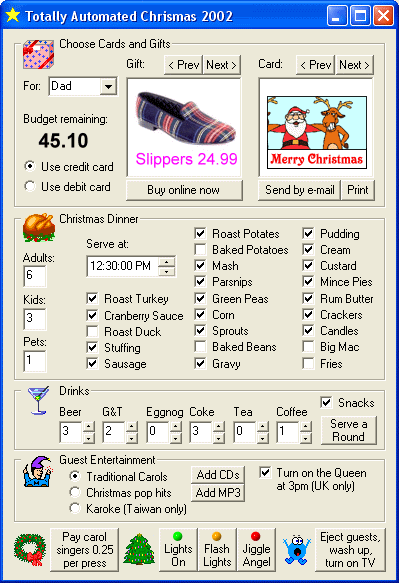
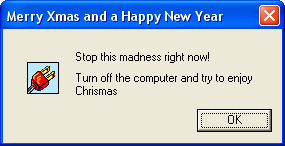
2002 This was one of my favorites to date. The card was made using Microsoft's Visual Studio, a computer software design system, in the style of a Windows program user interface. The little message box appears inside. Click on the cards to see them full size |
|
|
|
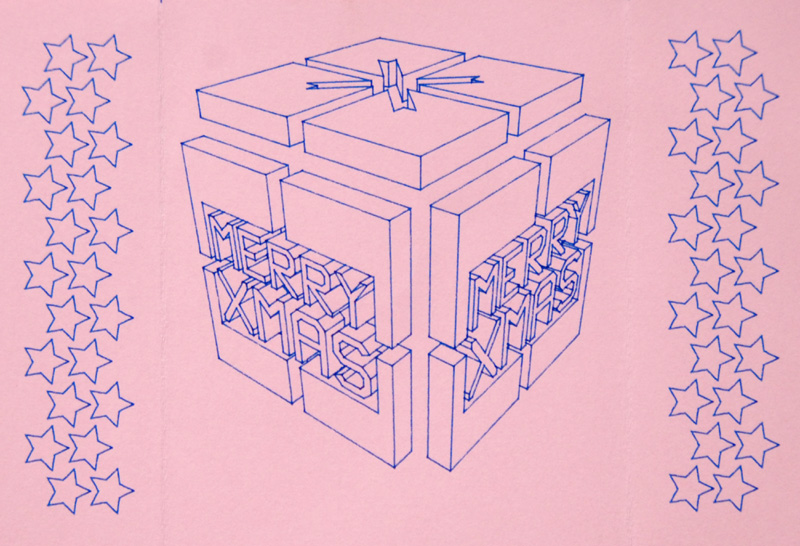
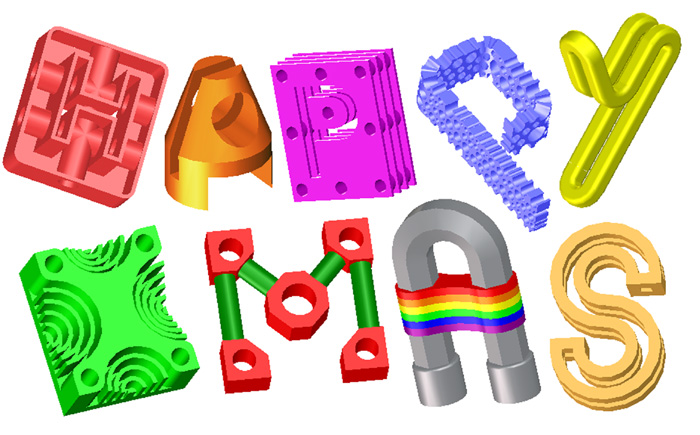
2003 Most mechanical things are designed today using CAD software. These 3D graphics packages allow you to create, assemble, and view a wide variety of mechanical parts without having to go into the shop and make anything. For real designs it has to be possible to realize the design using actual tools, but in the computer model you can let your imagination run a little wilder. So here I have drilled, milled, bent and extruded some more fanciful shapes. |
|
|
|
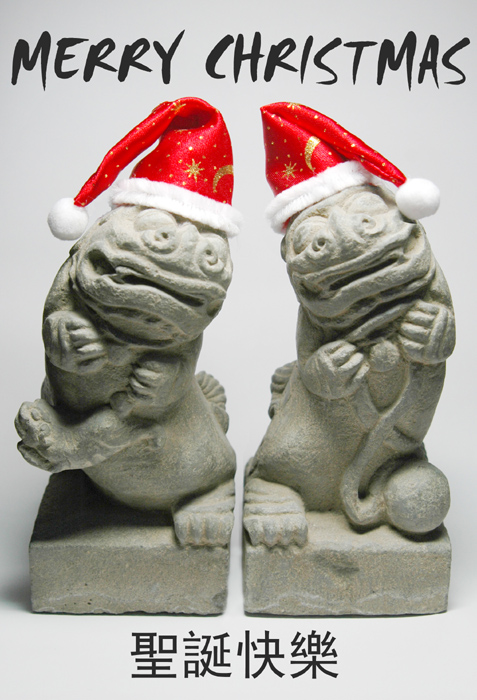
2004 I'd spent too much
time in China so this card was a bit of a rush job, nevertheless it turned
out pretty good. The stone statues are wind lions from the Taiwanese island
of Kinmen Read the full story here. |
|
|
|
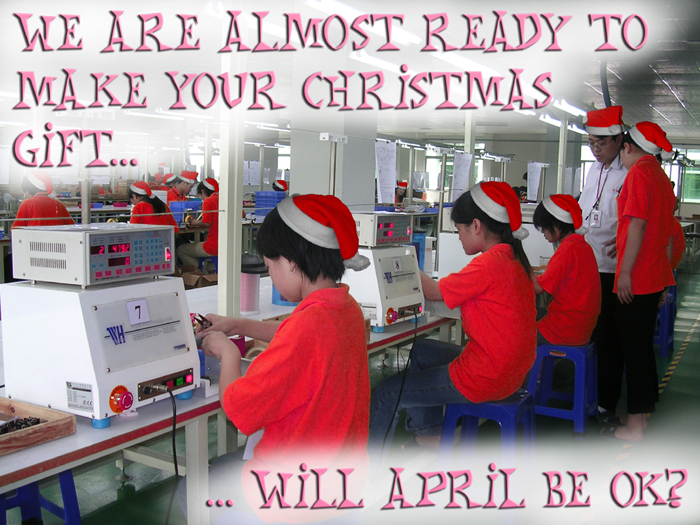
2005 This card was inspired by working in Chinese manufacturing plants. Everyone is always dressed the same, the original uniforms were yellow, not red. They certainly don't wear Santa outfits; the hats were put on in Photoshop. My friend posed with the hat and then it was cloned into the picture. |
|
|
|
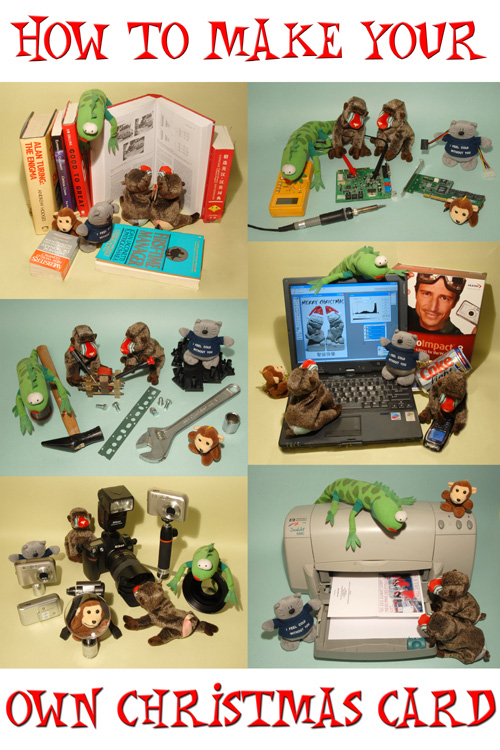
2006 It's been 25 years since my first homemade card, so here we see how it is done (at a high level at least). The pictures depict various high-tech disciplines: Research, planning & management, electronic engineering, mechanical engineering, computer science, image capture, and printing. This is the first of my cards that was printed photographically rather than with a personal printer. |
|
|
|
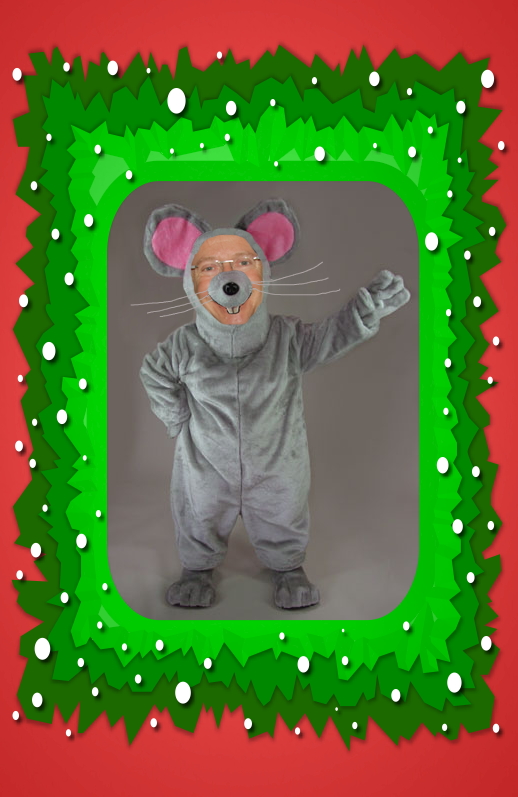
2007 Some of the Chinese zodiac animals don't make for very cute decorations (snake especially), but rat years are a blast. Here I am in full rat gear, except it's a Photoshop job of course. It suits me, I was born in the year of the rat
|
|
|
|
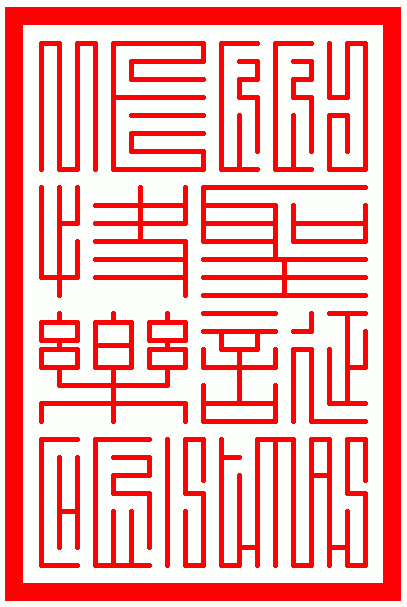
2008 In many East Asian countries people and companies use a personal seal stamp to verify their identity, rather than using a signature. The stamps are based on a stylized form of an archaic Chinese script. Looks closely and you might see both English and Chinese for "Merry Christmas" Read the full story here.
|
|
|
|
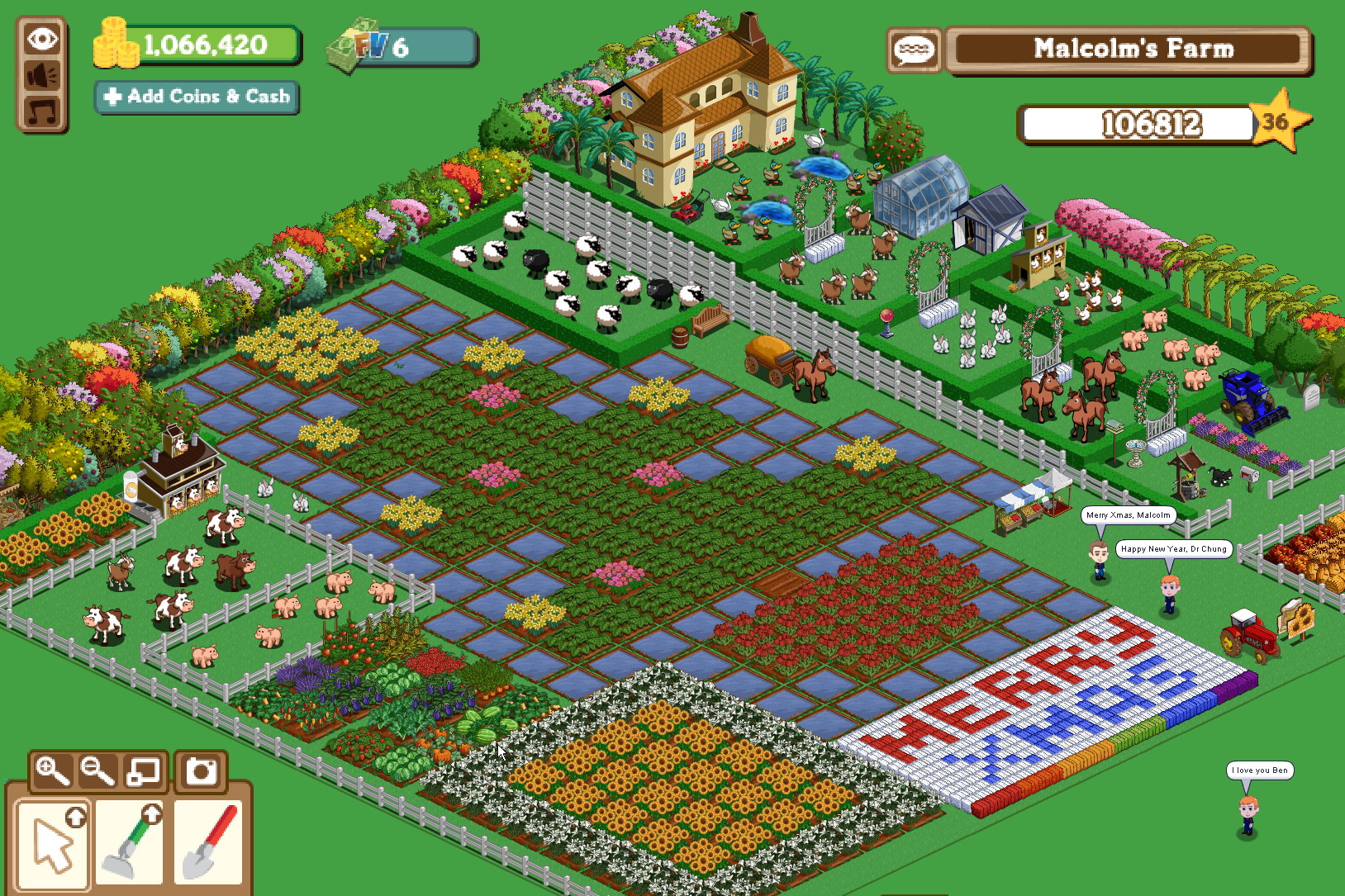
2009 An online farming
craze hit the world this year. The card shows my FarmVille farm arranged for
Christmas. It was not possible to get all the crops ready at the same time so
I had to montage things a bit. |
|
|
|
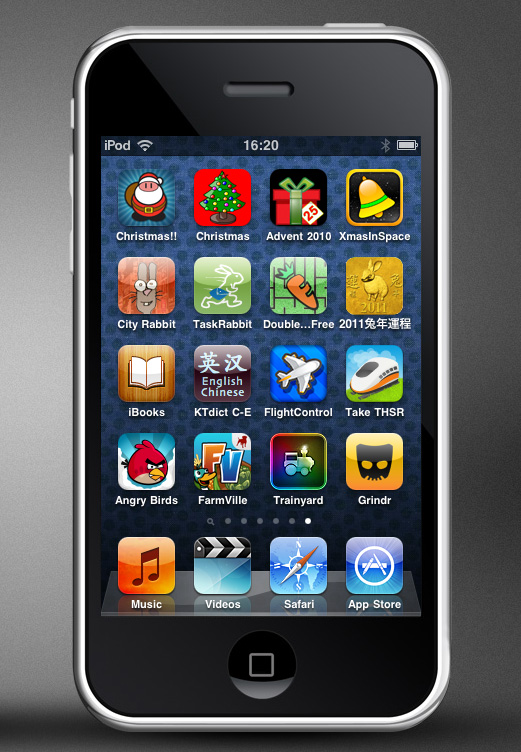
2010 A little homage to the iPhone here. The card shows the phone with a selection of Christmas applications and things related to next year's Chinese year of the rabbit. In addition a few popular applications appear like the addictive Angry Birds, Trainyard puzzle which is highly recommended by me, Farmville application (see 2009 s card), and Grindr which uses the GPS of the phone to locate nearby gay hookups. |
|
|
|
2011 The design of this
card was inspired by achievement tables that track milestones in PC and
handheld games. This one was based on Angry Birds. Often games keep these
data in the cloud (online) so you will always be able to access your progress
and compare it to other people's. How does your average
Christmas score? |
|
|
|
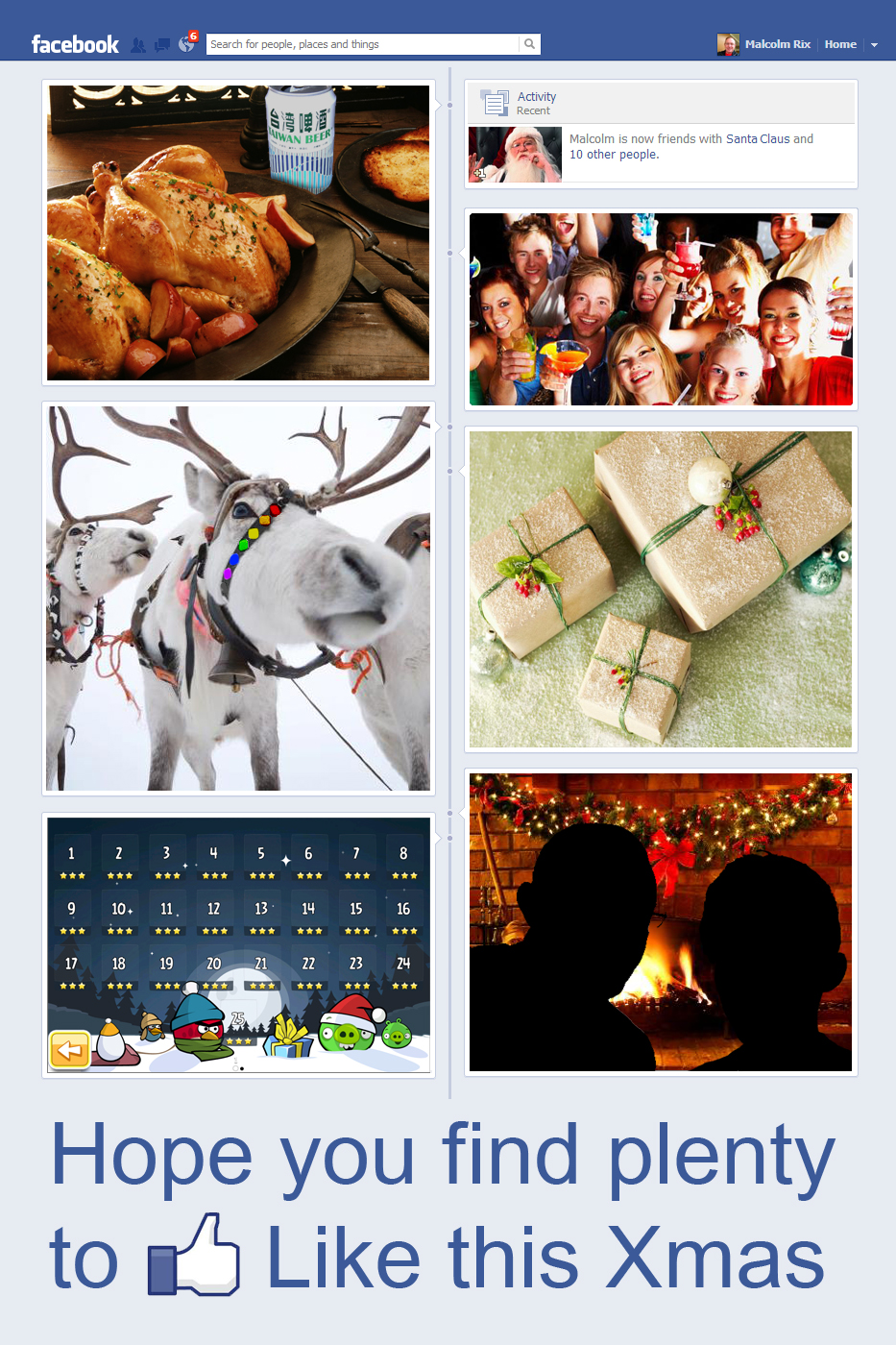
2012 The card is a play on
Facebook's Like function. It was me
who completed Angry Birds Seasons to three-star level. The rest are more or
less stock images |
|
|
|
2013 This year's card is
an imaginary Android GPS application showing Santa, his 9 reindeer (the ones
from the song Dasher, Dancer, Prancer, Vixen, Comet, Cupid, Donder, Blitzen,
and Rudolph), not to mention shepherds, kings, a turkey dinner, and an angel
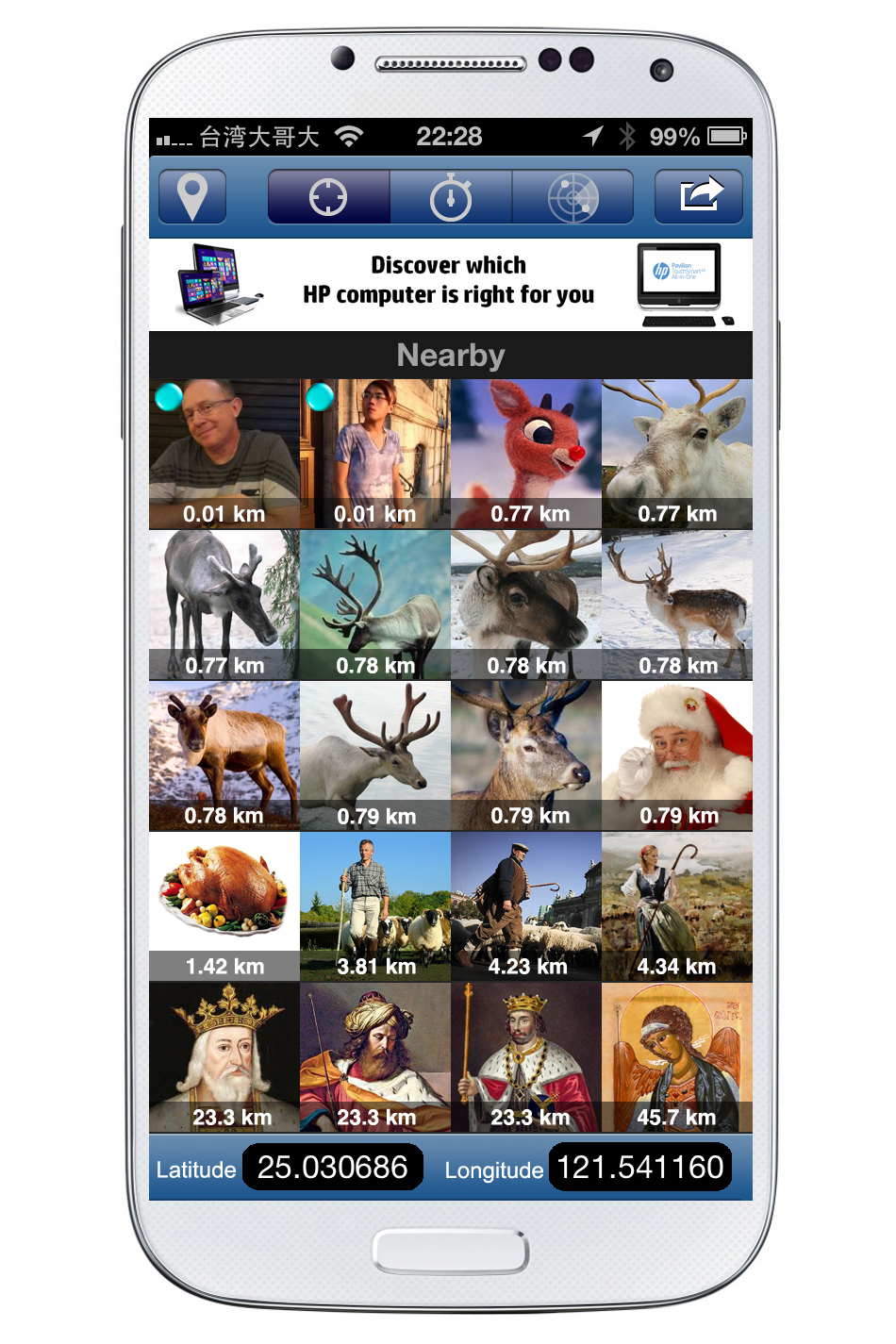
drawing near. It is loosely based on gay dating app Grindr. If you put the coordinates at
the bottom into a mapping app you will be able to locate my house. |
|
|
|
2014 Texting applications
are replacing SMS and even the phone for everyday communication. The stickers
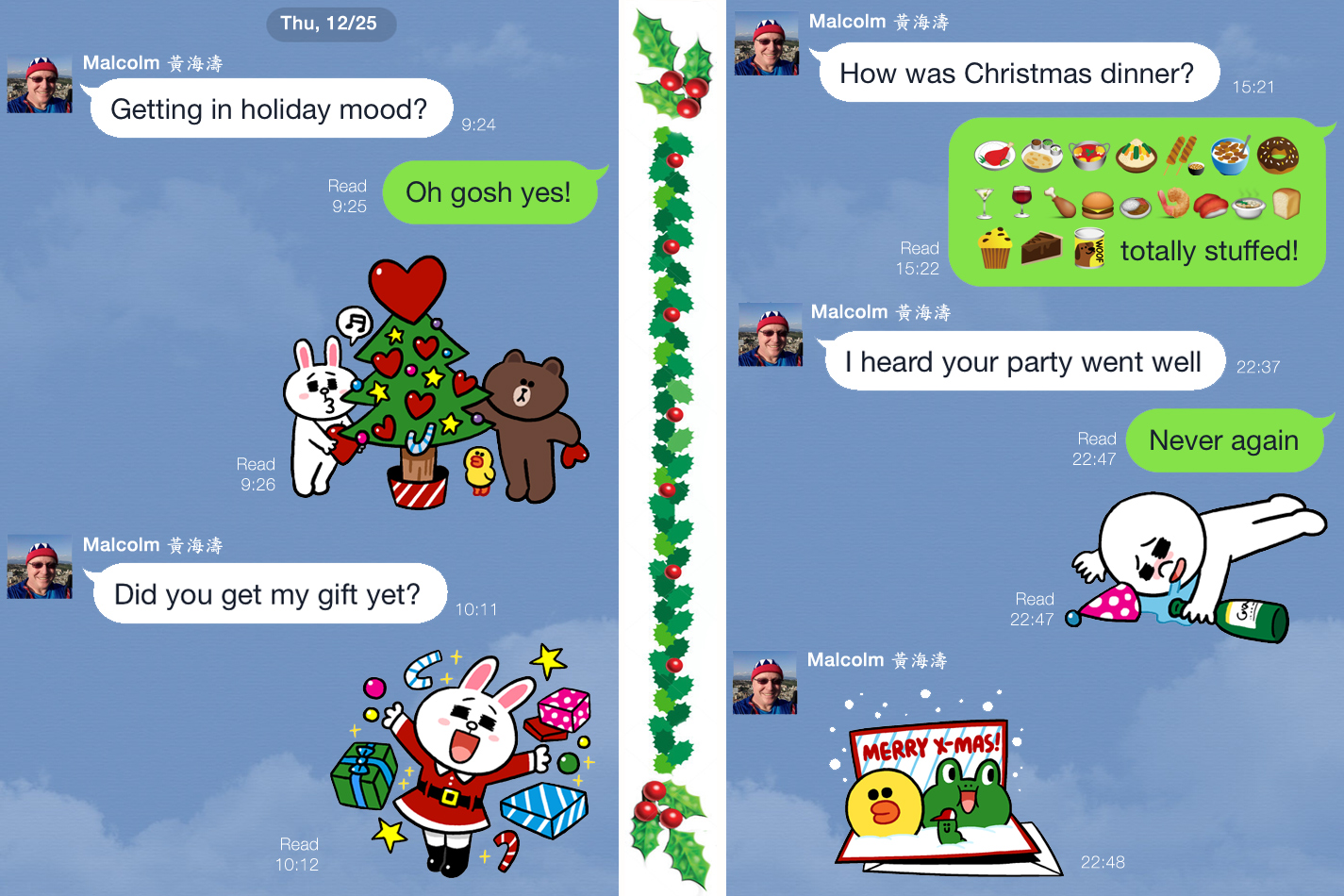
are from LINE. The conversations are still the same old nonsense though! |
|
|
|
2015 This is a scan of
real cross-stitch embroidery that I made. It took about a week of evenings to
sew so I did not have time to make one for everyone. Logically cross-stitch
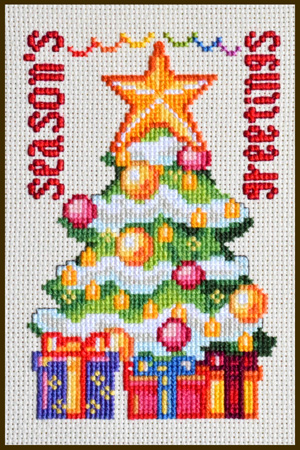
is the same as a GIF file, with pixels drawn from a limited color set. There are about 40 colors in the design. |
|
|
|
2016 Cell
phone application Pokémon Go was all the rage, the image imagines what
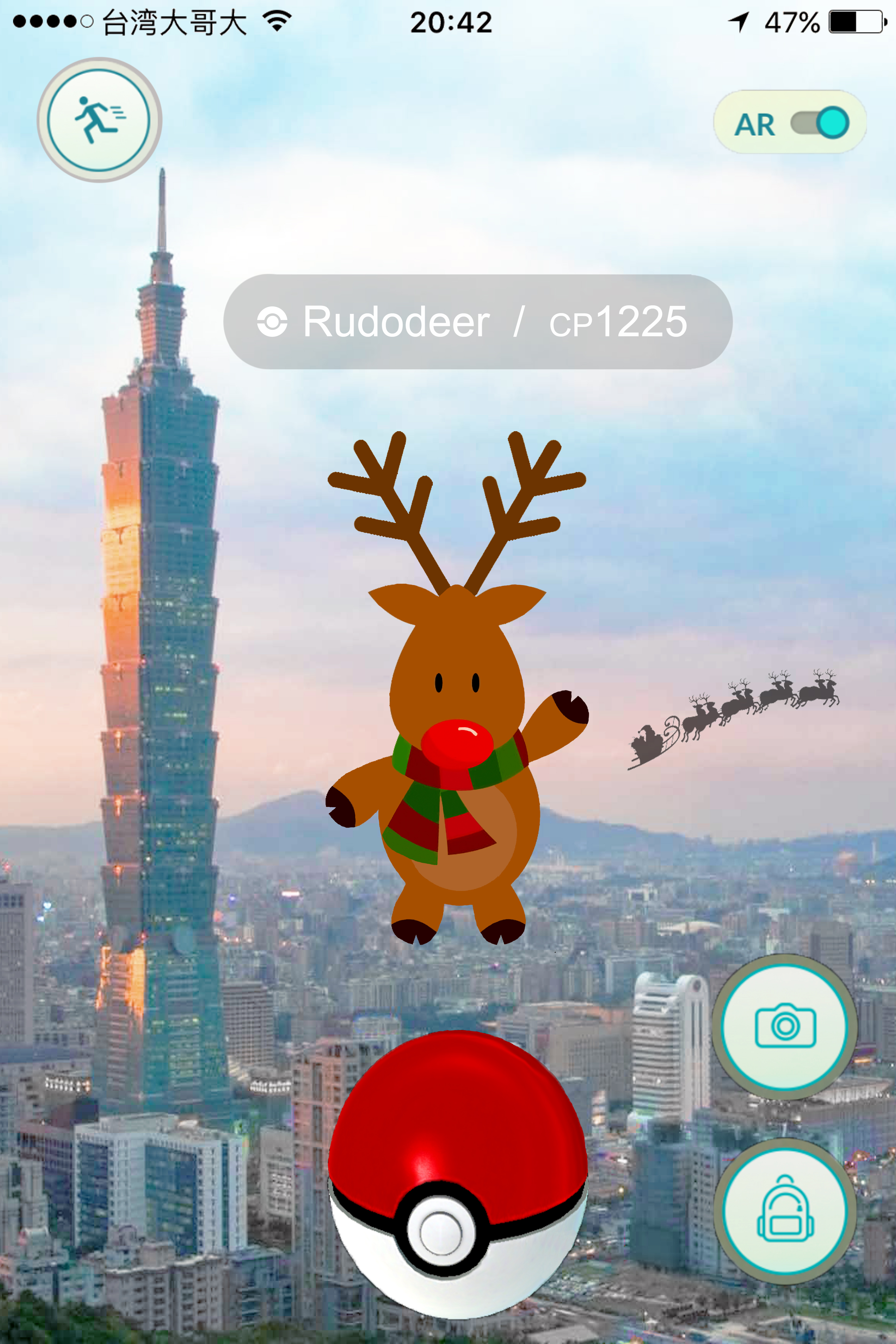
Christmas pokémon might look like over Taipei. |
|
|
|
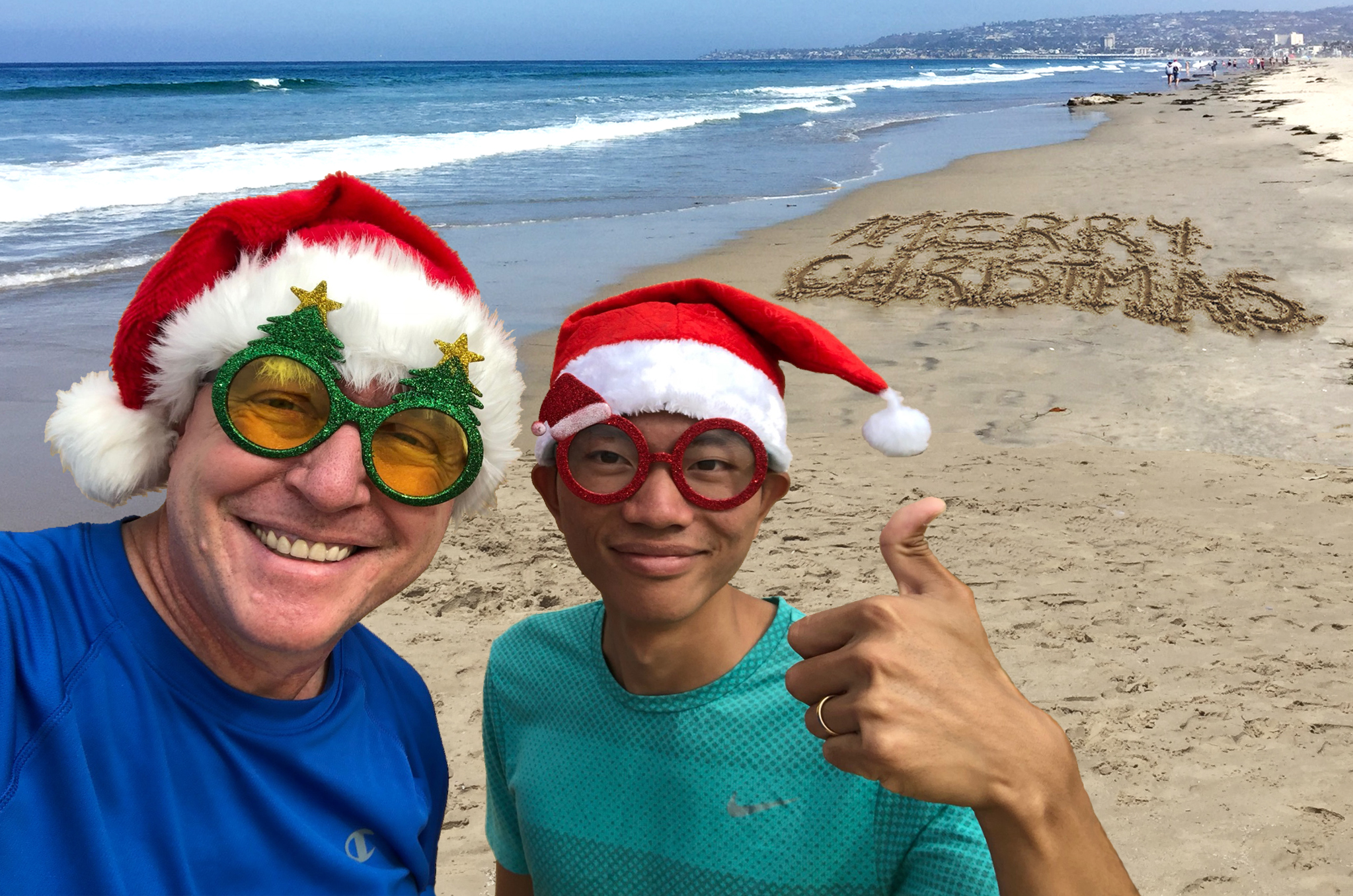
2017 Alan
and I got married this year. Here we are on the beach in Xiamen. Well almost,
the beach is actually Ocean Beach in San Diego. Only the writing and us are
in Xiamen. The Merry Christmas in
the sand would be about 20 m wide, but the real one was only about 2 m across.
It's all photomontage. |
|
|
|
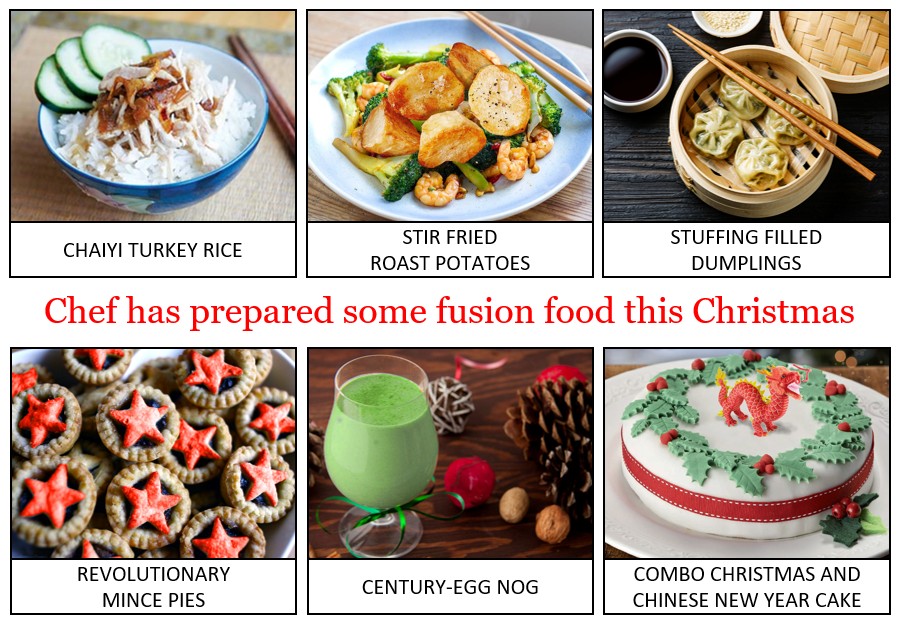
2018 Christmas
parties in Taiwan inevitably involve a certain amount of improvisation due to
limited availability of ingredients. Sometimes participants are unfamiliar
with details of the iconography. Decorations often get reused for the subsequent Chinese New Year.
This card just takes the cultural adaptation a bit further. |
|
|
|
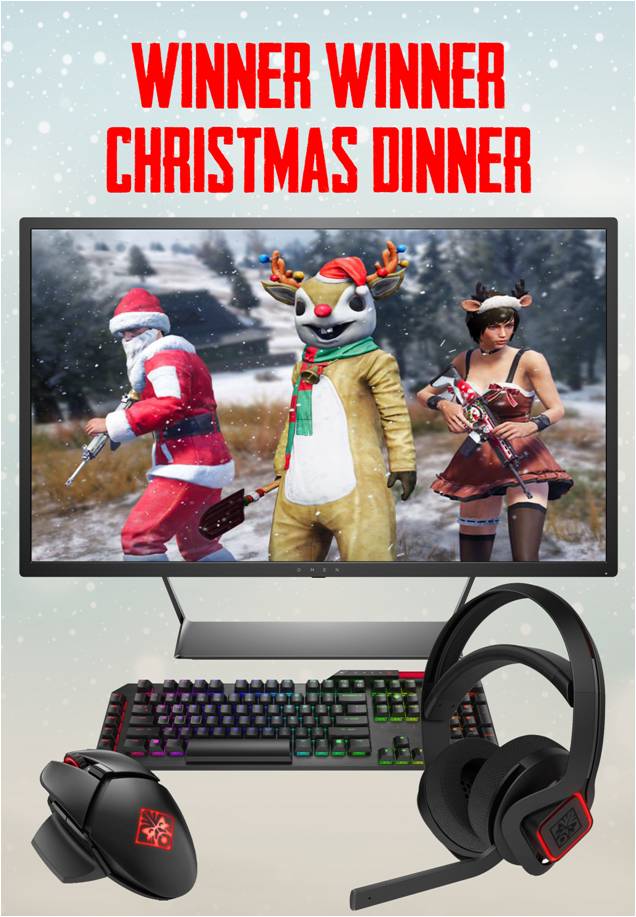
2019 Player Unknown
Battlegrounds was a
hit game this year. It is a battle royale game, meaning that if you kill all
100 opponents then you are the winner and the message, Winner winner chicken dinner pops up. The computer products are all gaming accessories from HP. |
|
|
|
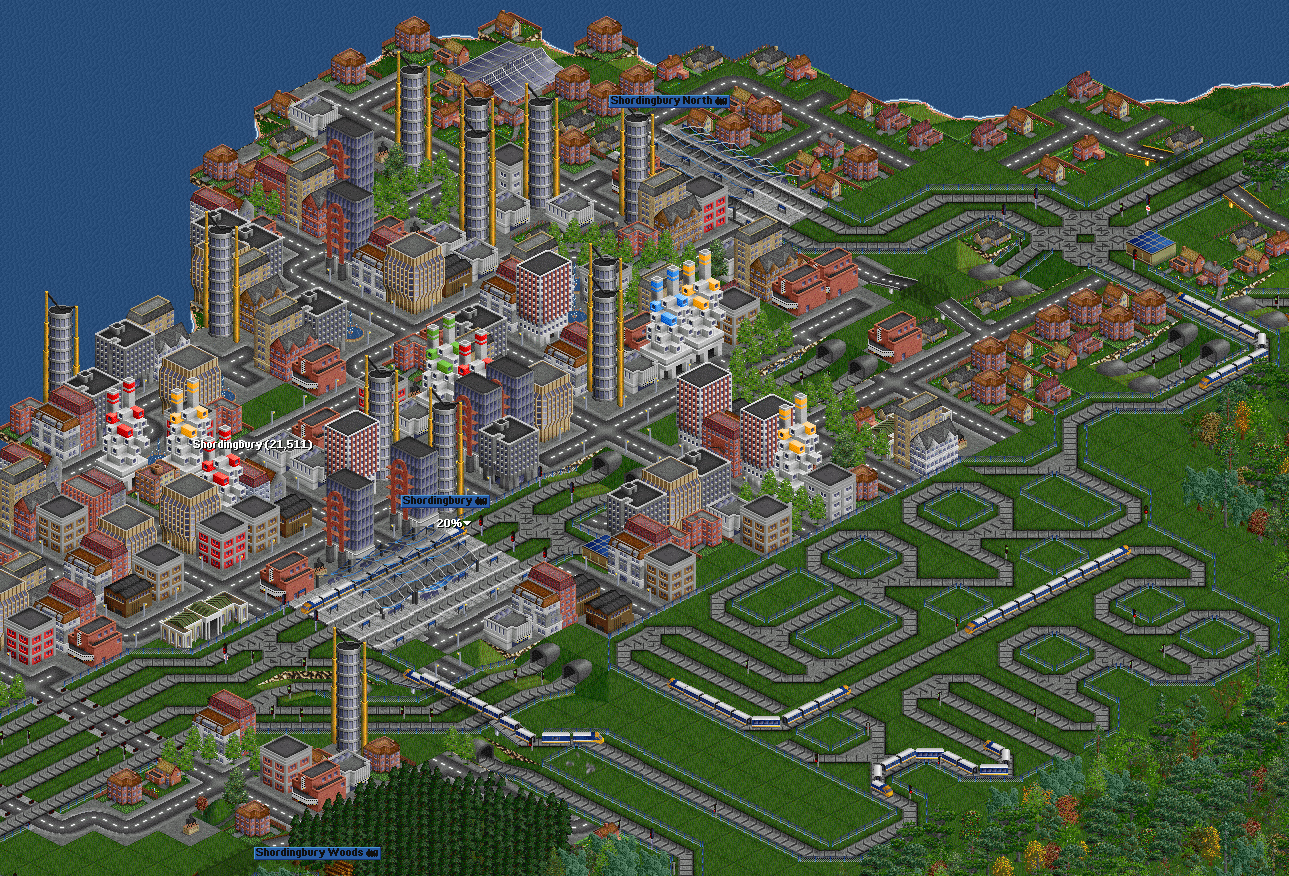
2020 Stuck
in COVID lockdowns people have taken to computer gaming. In this game you can build
yourself a virtual train set and play for hours. Whether running high speed
maglev trains around a Merry Xmas
track would be very comfortable for the passengers is another story. |
|
|
|
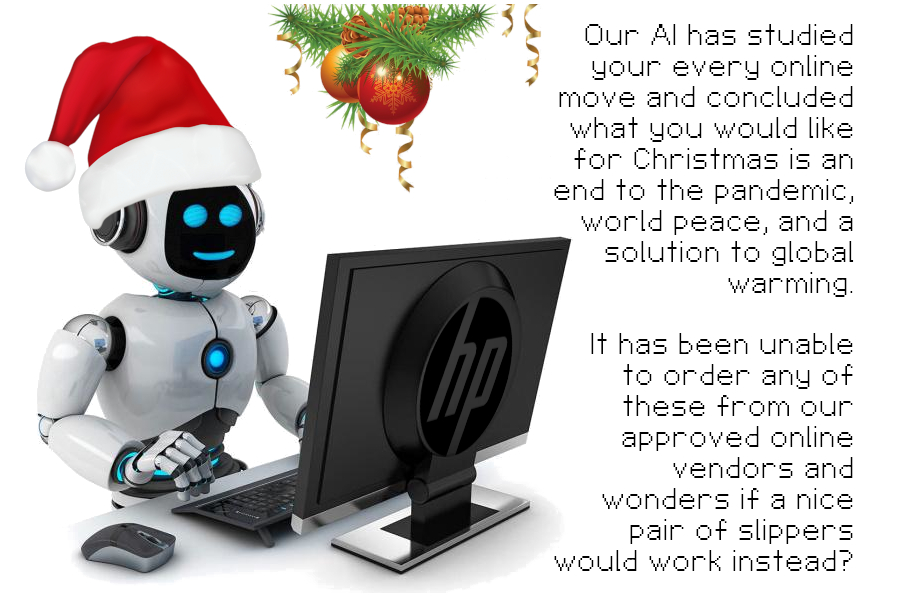
2021 Have
you found yourself begging an automated answering system to let you speak to
a human? Wondered why a website chat assistant is about as helpful as a
five-year-old? Tried to have a deep meaningful conversation with Siri or
Alexa? This card is all about how AI right now has trouble grasping what it
means to be human. |
|
|
|
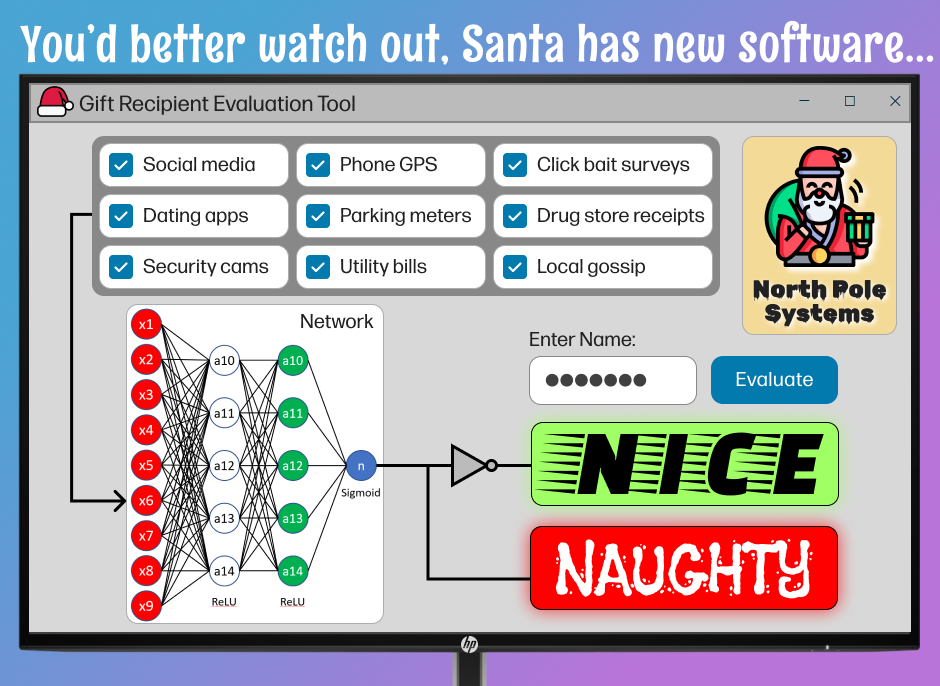
2022 Recently
AI has made huge advances in computer understanding of images, video, and big
data. Much can be learned about a person by combining seemingly innocuous
sources. The card shows a neural network used to search for patterns in data. |
|
|
|
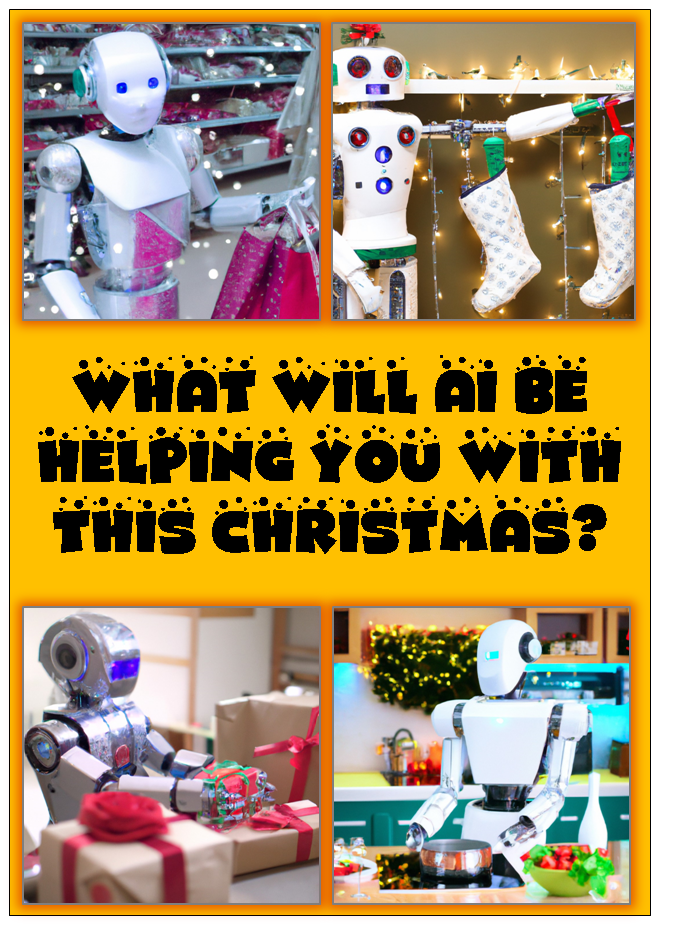
2023 Everyone seems to
be going crazy about AI this year, business are falling over each other to embrace the
technology. Rollout into our everyday lives has been more pedestrian since to be useful it
has to do more than push data around on servers. This year's card imagines
what it will be like when we do manage to employ AI to give us a little help at the holidays.
The card was created using Dall-E an AI system that can create a picture based on a short textual description
of the desired image. |
|
|
|
2024 Noticed your screens are increasingly crammed with ads and offers?
I was wondering how the holidays might be improved if I sold some greeting card space. The ads vary from silly to dystopian. The AIs are clearly edging ahead of contemporary work in terms of bias, but I suspect it
won't be long before the world catches up. Like people, don't believe everything computers tell you! |
|